PHILIPS
Philips Autofade is an intelligent hair clipper concept designed to make professional-looking fades easier to create at home. Developed for Philips Personal Care, Autofade combines ergonomic product design, motion-sensing technology and digital guidance to turn a skill-intensive grooming technique into a more intuitive experience.
Making professional grooming accessible at home Philips challenged our team to rethink the traditional hair clipper for users who want to create their own fade. The objective was to develop a distinctive yet credible addition to the Philips Personal Care portfolio, balancing user experience, brand identity, ergonomics, technical feasibility, manufacturing and cost. Rather than designing another conventional clipper, the project explored how an integrated product and digital experience could actively guide the user through the cutting process.
Creating a clean fade requires controlled movement, gradual transitions in cutting length and clear visibility around difficult areas of the head. Existing clippers are primarily designed for cutting hair at a consistent length, leaving inexperienced users to reproduce a barber’s technique without the necessary skill or feedback. The central challenge was therefore to reduce this technical barrier without making the product bulky, complicated or unfamiliar. The solution needed to automate part of the fading process while remaining ergonomic, easy to clean, visually aligned with Philips and realistic enough to develop into a consumer product.
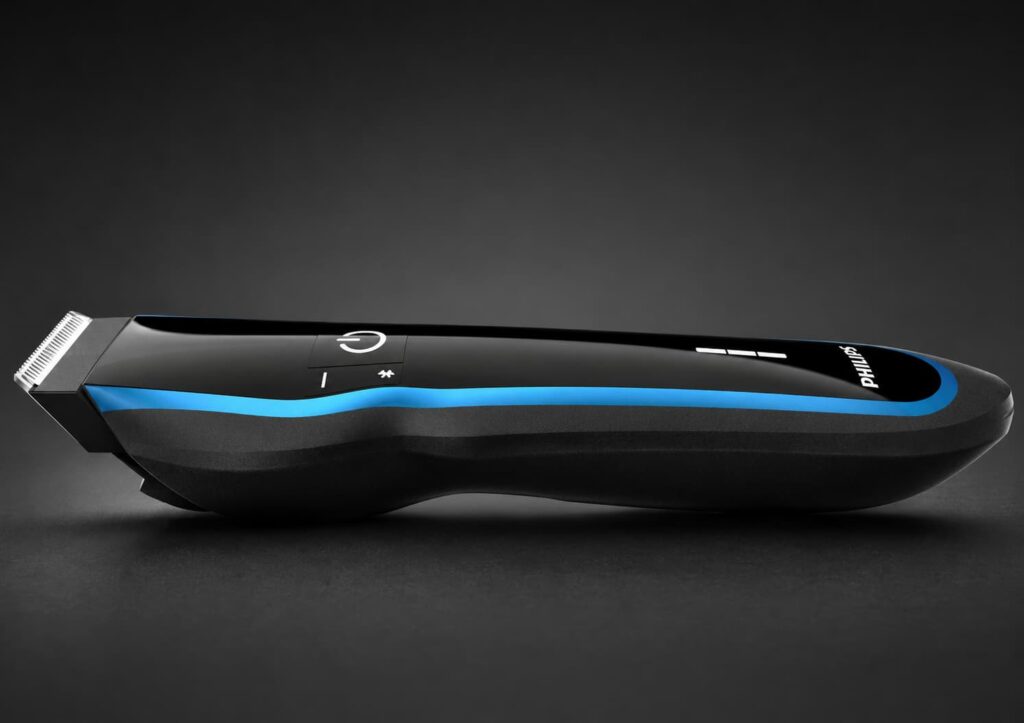
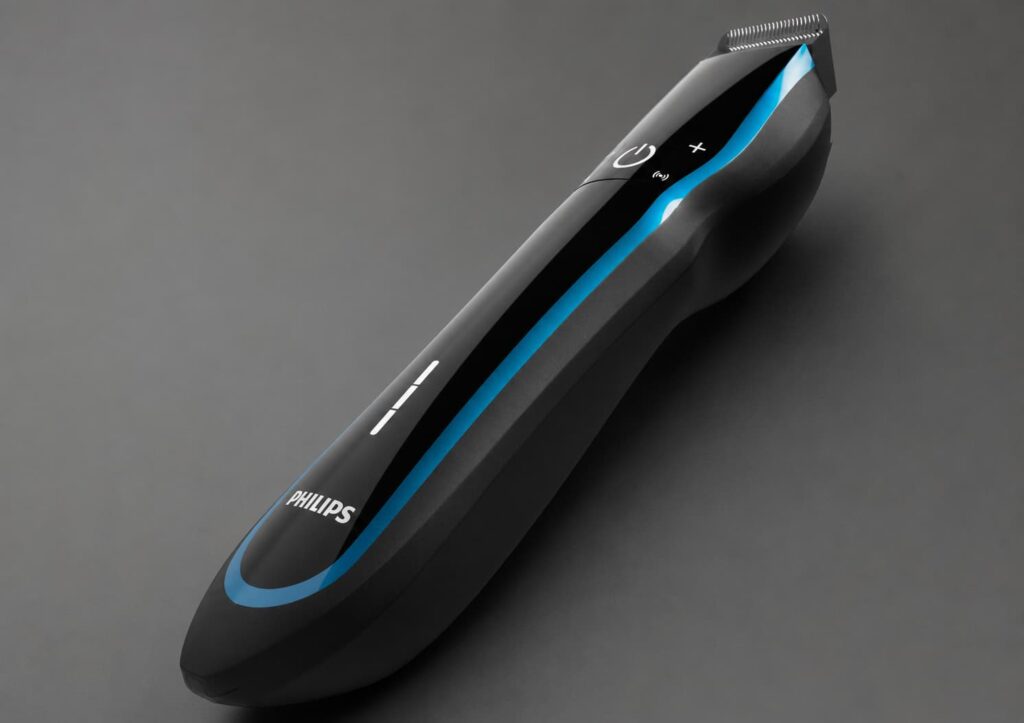
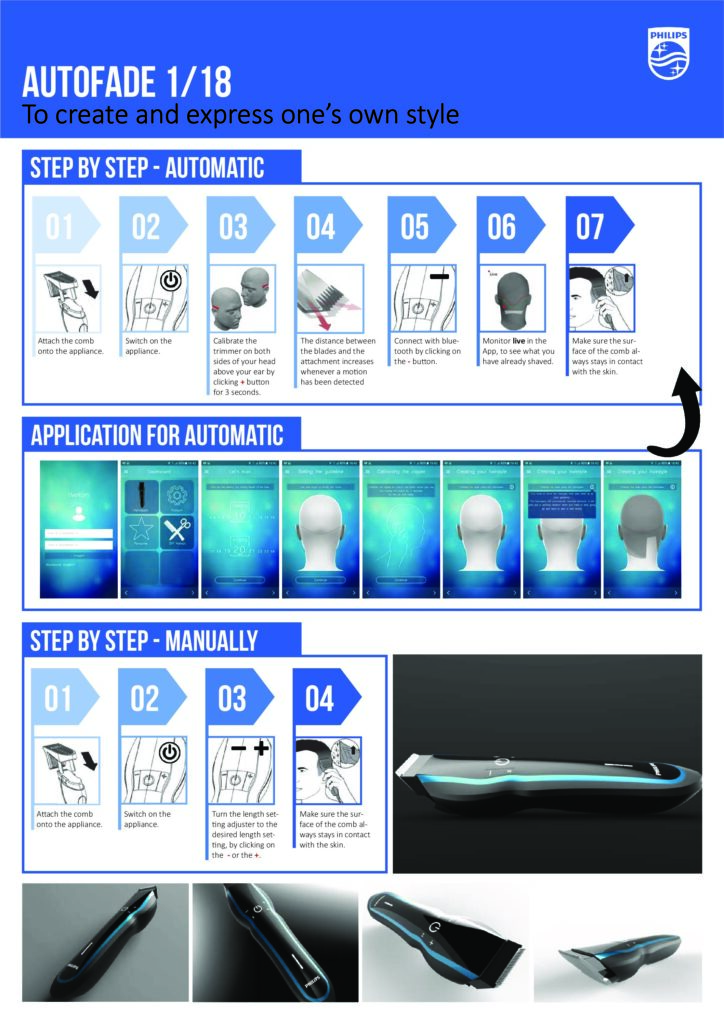
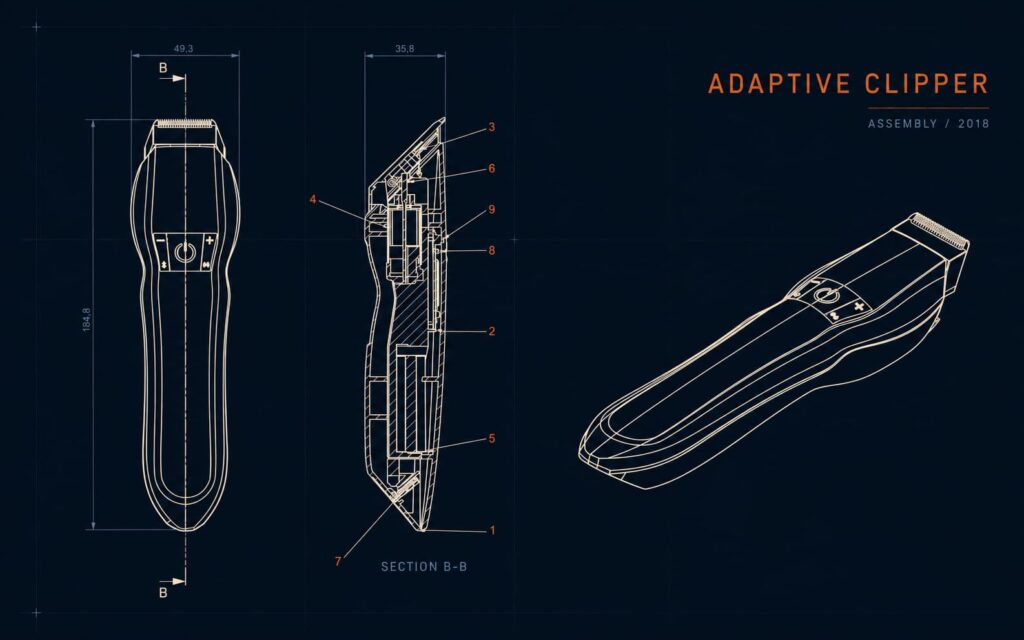
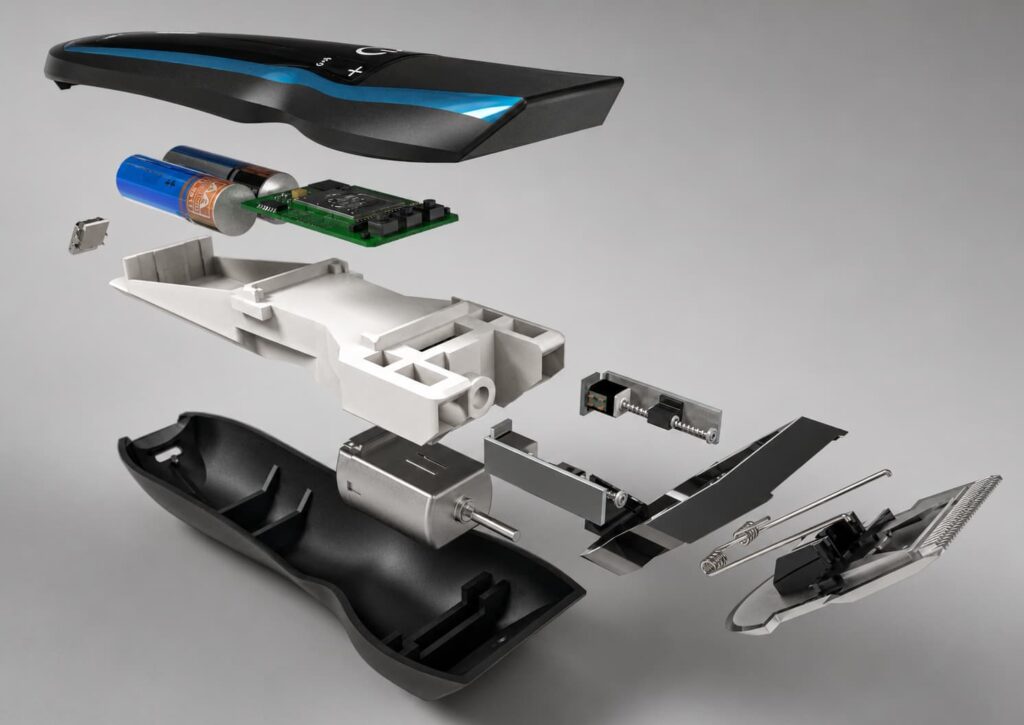
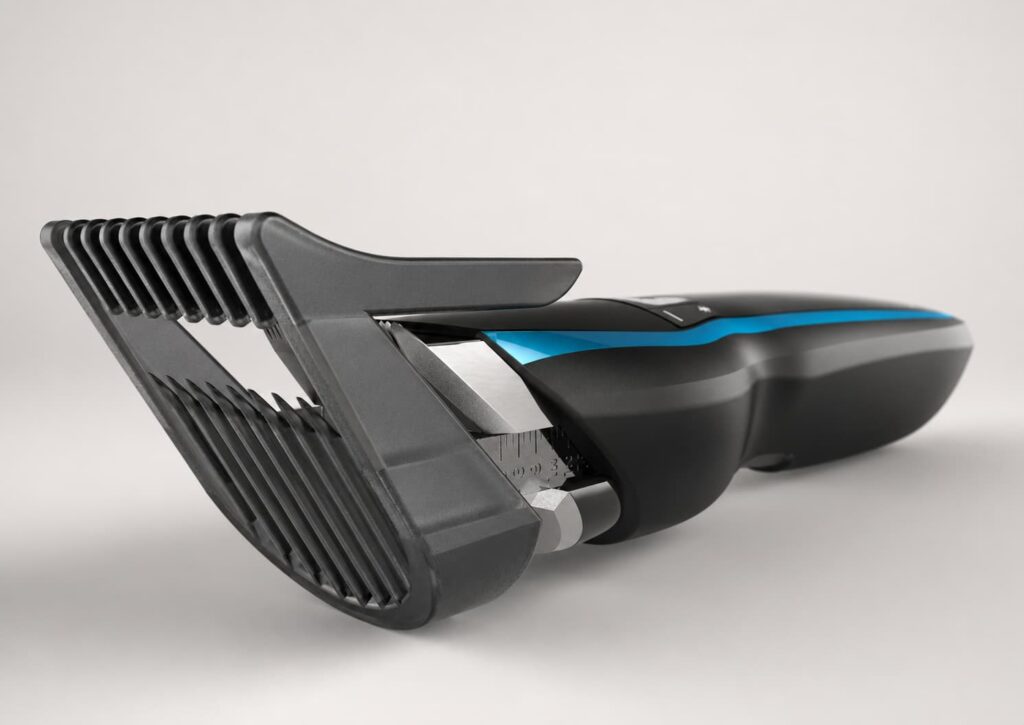
Developed Autofade, an intelligent hair clipper concept that translates the upward motion of professional fading into an automated cutting-length adjustment. Motion sensors detect how the clipper moves across the user’s head, while miniature motors gradually reposition the cutting guard to create a smooth transition between hair lengths. A connected application provides calibration, visual guidance and feedback on areas that have already been covered. The final concept brought together industrial design, ergonomics, mechanical engineering and digital interaction within a product designed to fit the Philips Personal Care portfolio.
The project resulted in a fully developed product concept that demonstrated how motion sensing, mechanical adjustment and digital guidance could make self-fading more accessible to inexperienced users. The final proposal was presented as an integrated Philips Personal Care experience, supported by ergonomic research, product visualisation, prototyping, technical drawings, material selection, cost analysis, risk assessment and production documentation. It established a credible foundation for further technical development and consumer validation.