NS
A circular recycling system designed from recognisable components of retired NS train interiors. The concept transforms overhead luggage racks and materials recovered from passenger seats into a modular waste-separation unit for stations and other public environments. Rather than concealing the origin of the materials, the design preserves their recognisable character and uses it to communicate the value of reuse.
NS already reused or recycled most of the material removed during train renovation, but had not yet found a suitable circular application for large volumes of passenger seats and overhead luggage racks. The assignment was to investigate the composition and remaining value of these components, identify a suitable market and develop a new product using approximately equal proportions of recovered and newly introduced materials. The proposal needed to align with the circular ambitions of NS while remaining durable, repairable, commercially realistic and scalable to thousands of units. The product also had to cost less than €900 and be suitable for demanding public environments.
The discarded train components were not designed for reuse. Different materials had been bonded, reinforced and glued together, making the products difficult to disassemble, separate and process. At the same time, NS was receiving approximately 800 retired luggage racks every week. A small decorative object might create an attractive sustainability story, but it would barely address the scale of the material stream. The intervention therefore needed to consume components in meaningful quantities and operate within a realistic market. The challenge was to preserve the recognisable qualities of the original train parts while transforming them into a functional product that was intuitive to use, easy to maintain and capable of surviving daily use in public space.
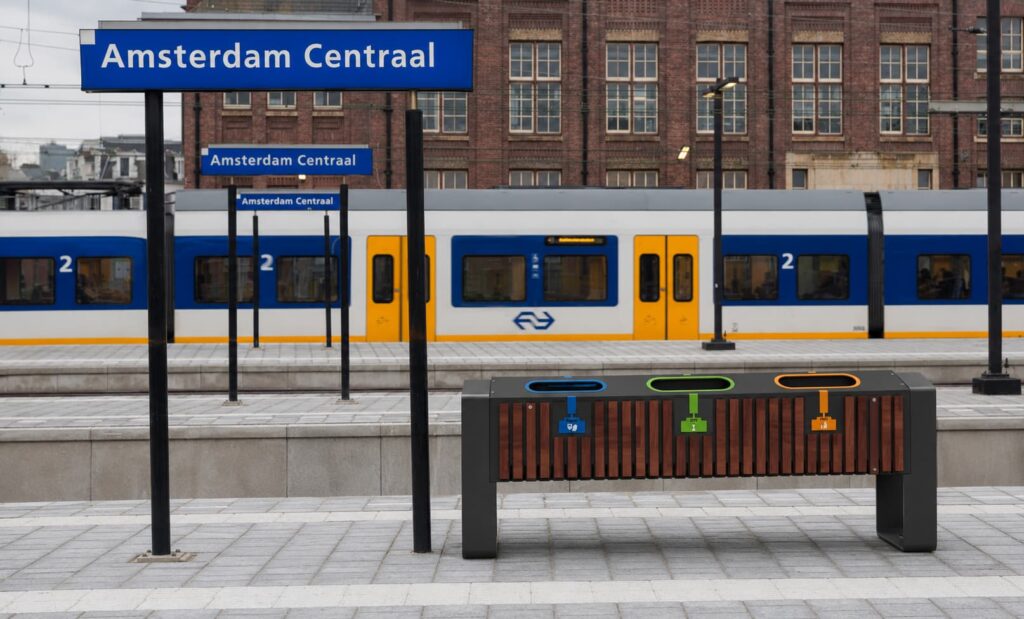
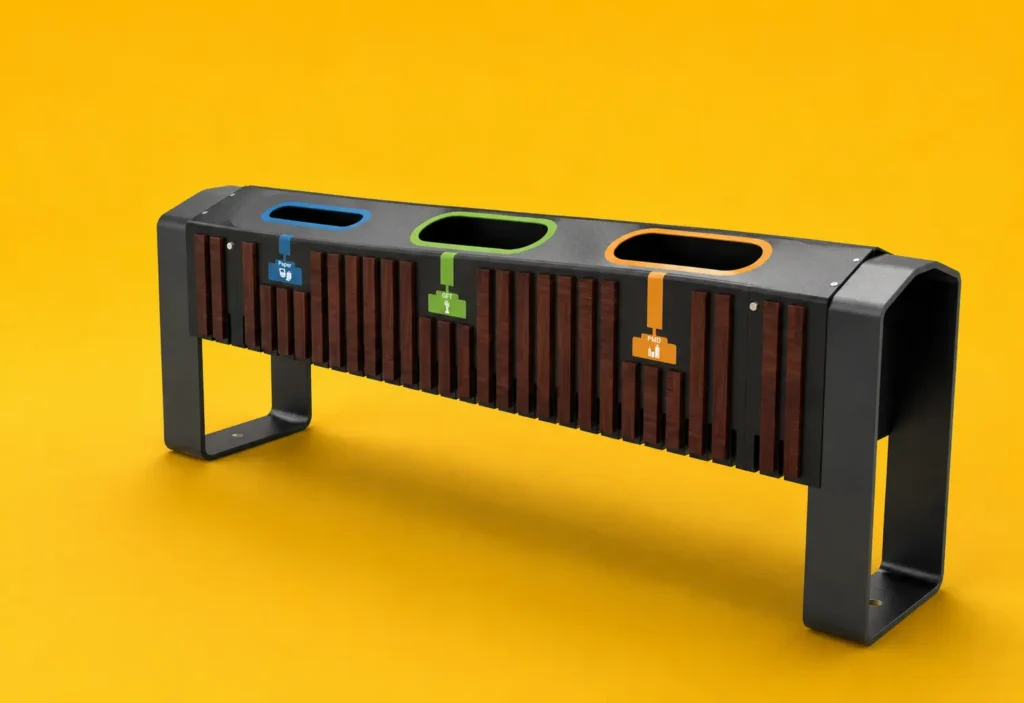
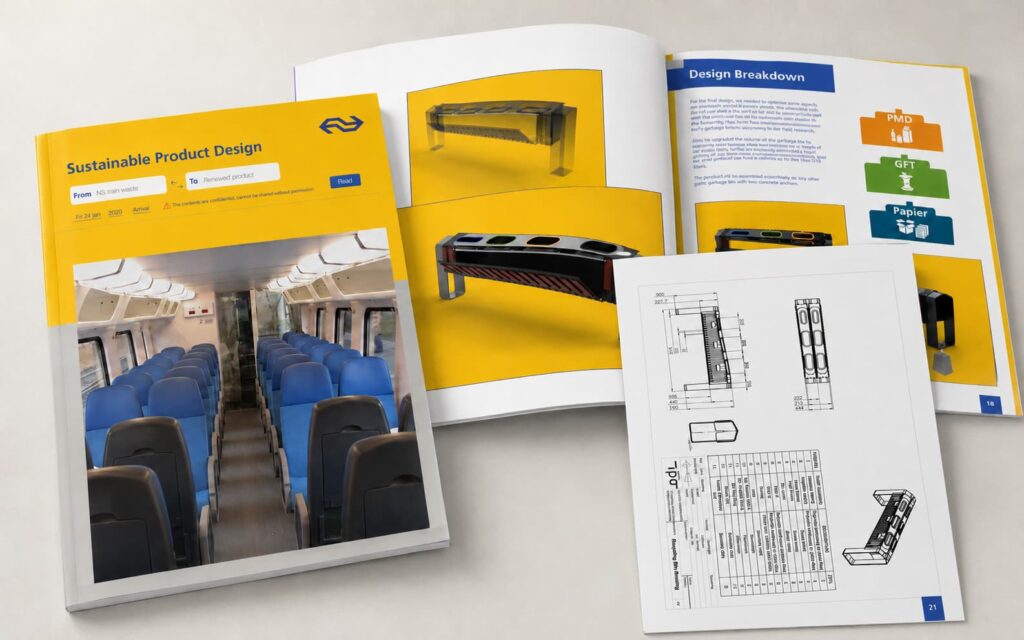
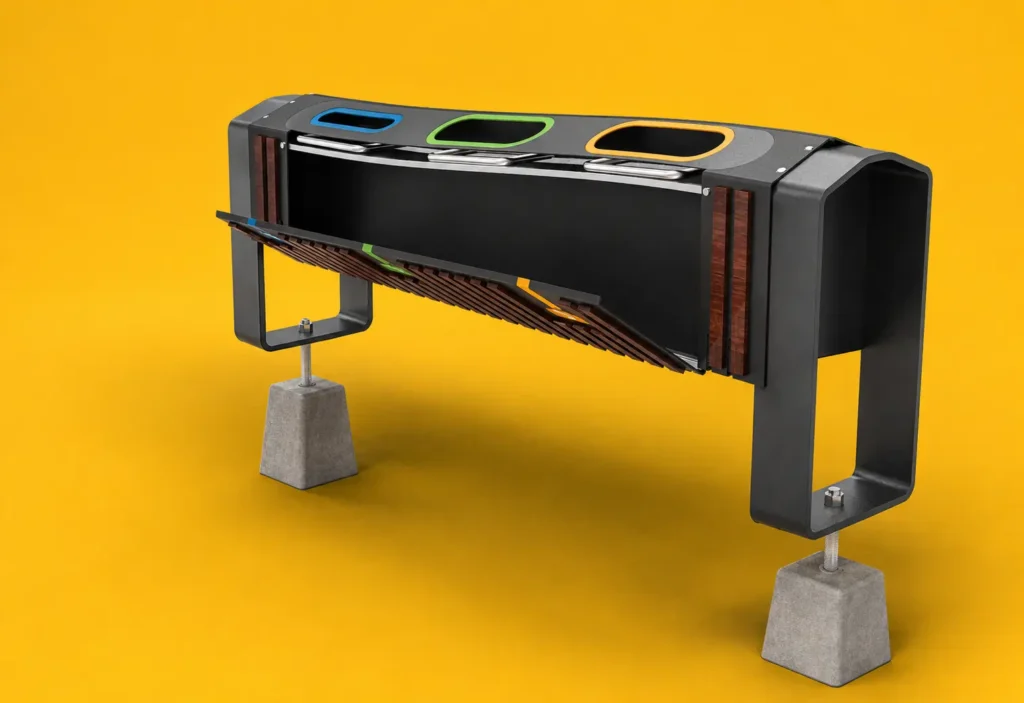
The final concept repurposes two NS luggage racks as the main structure of a 210-litre recycling bin, supported by multiplex boards recovered from first- and second-class passenger seats.
The bin separates three commonly used waste streams:
PMD packaging: 90 litres Organic waste: 70 litres Paper: 50 litres
The compartment sizes were deliberately adjusted according to expected usage at stations rather than divided equally. Colour-coded openings and recognisable icons provide immediate guidance and help reduce incorrect disposal. A design-for-disassembly strategy replaced the difficult construction of the original train components with a system that can be assembled, repaired and taken apart more easily. Individual panels and structural parts can be replaced following wear or vandalism, extending the usable life of the product and preserving opportunities for future recovery.
The project resulted in a detailed circular product proposal that connected material reuse with everyday public behaviour.
NS feedback recognised the visual quality of the concept, the distinctive reuse of the luggage racks and its potential to encourage more sustainable waste separation. The recognisable train components gave the environmental story a physical presence rather than reducing circularity to a sticker explaining that something vaguely responsible had occurred.
At an estimated ten units across each of approximately 400 stations, an initial implementation could support 4,000 recycling units and repurpose 8,000 luggage racks. The concept could also be adapted for offices, other public spaces and international railway environments.
The project established a technically and commercially grounded direction for further development. Before implementation, the proposal would still require user testing, detailed failure analysis, design-for-assembly assessment and a complete life-cycle analysis. In other words, a credible concept ready for validation, not the usual portfolio miracle that supposedly went from sketch to nationwide rollout over a weekend.