SONION
A configurable family of high-end in-ear monitor concepts developed to showcase Sonion’s balanced armature technology to current and prospective audio brands. Rather than presenting the components inside a generic sample shell, the concepts translate their technical quality into a premium physical experience that can be adapted to different brand identities.
Sonion develops balanced armatures and other micro-audio components used inside professional and consumer audio products. These components were supplied to clients in functional sample earbuds, allowing them to experience and evaluate the sound technology. The existing samples were visually dated, offered almost no possibility for personalisation and did not reflect the design language of the brands receiving them. Sonion therefore needed a more compelling way to demonstrate its components to existing and prospective clients. The assignment was to research and develop three conceptual in-ear monitors for the high-end audio market. Each concept needed to accommodate Sonion’s internal components while remaining easy to adapt in dimensions, detailing, materials and visual identity for individual clients.
An in-ear monitor provides very little physical space, yet it must accommodate several specialised components for low, mid and high frequencies, along with the nozzle, tubing, connectors and structural features. The outer form also needed to be comfortable inside the human ear and suitable for additive manufacturing. Minor geometric changes could affect internal space, wall thickness, assembly and fit. At the same time, the product could not be designed around one fixed brand identity. It needed enough character to communicate high-end quality, while remaining adaptable to clients with very different design languages. The central challenge was therefore to create recognisable concepts without locking Sonion into a single aesthetic direction.
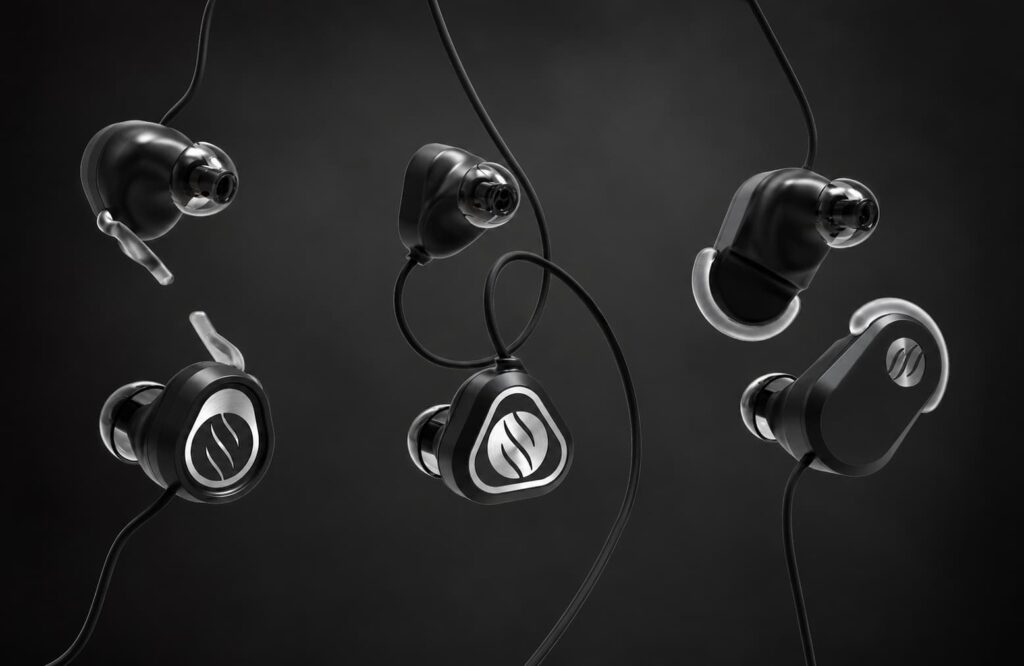
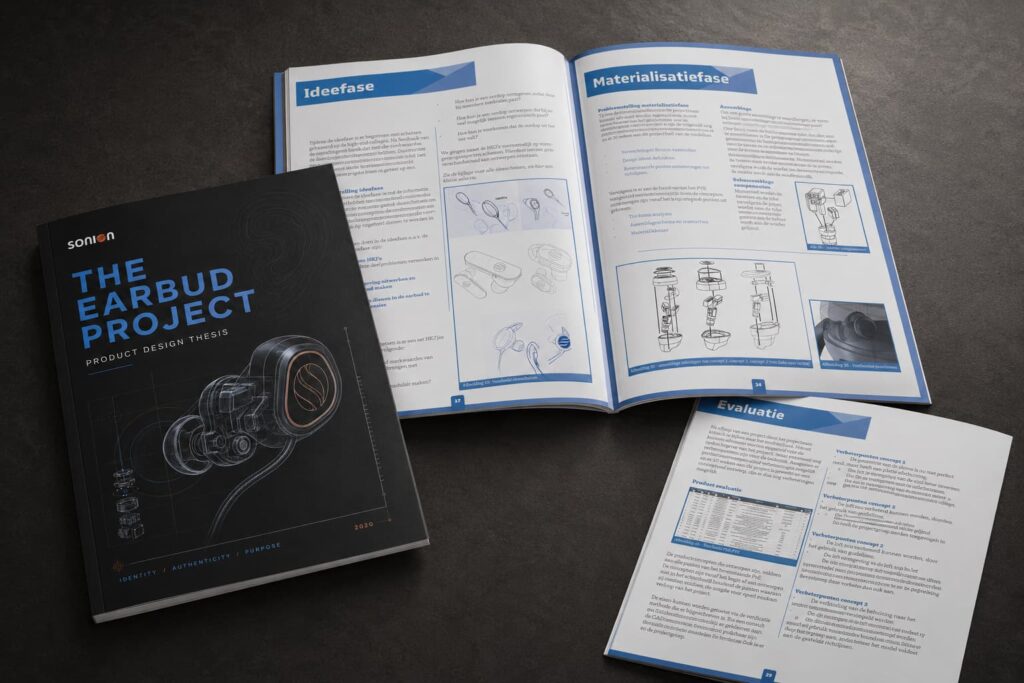
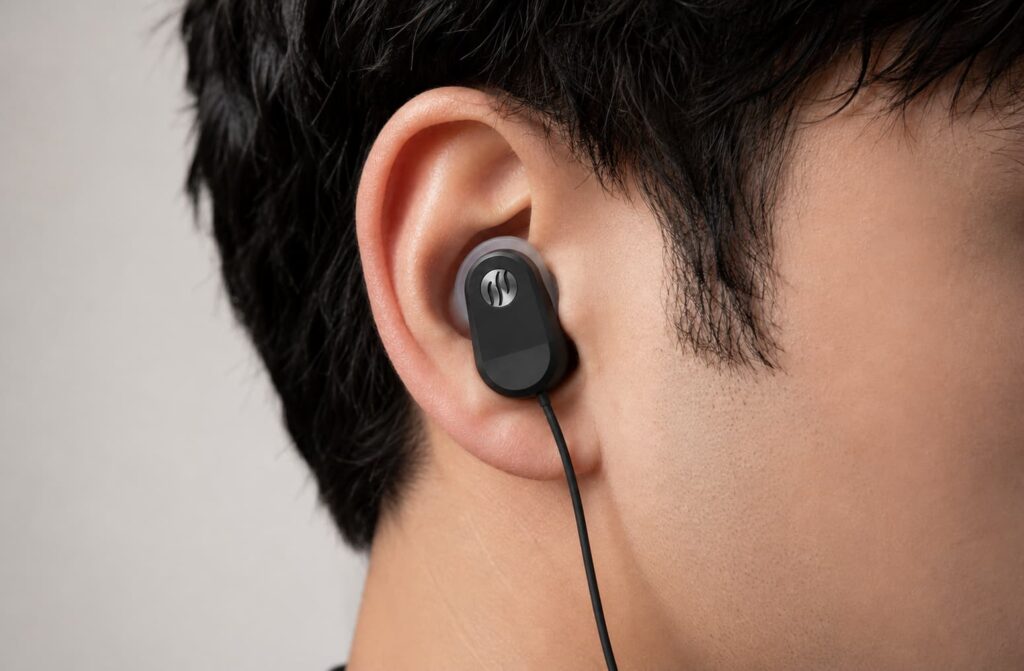
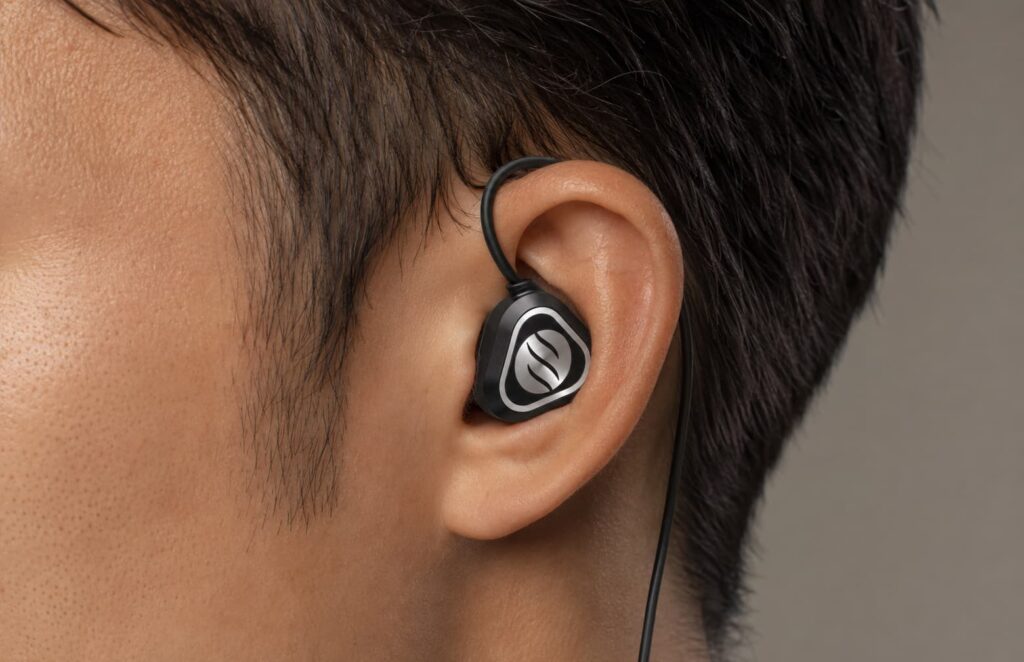
Developed distinct high-end IEM concept based on research into Sonion’s technology, premium audio brands, materials, patents and product-design characteristics.
The concepts explored different combinations of minimalist geometry, layered surfaces, premium material inserts, sleeves and over-ear configurations. Full-scale 3D-printed models were used to assess physical proportions and ergonomic fit before the designs were developed further through surface modelling.
Each concept was then constructed as a structured CAD model around the supplied Sonion components. The feature trees were organised using shared terminology, clearly defined modelling stages and a reduced number of editable features. This made it possible to modify dimensions, surfaces and detailing without rebuilding the entire design.
The technical proposal included:
DLP-printed ABS Tough shells Cast-silicone sleeves Laser-cut decorative inlays in brand-specific materials Linear assembly of the internal audio components Lip-and-groove connections with defined tolerances Wall-thickness analysis for additive manufacturing Space claims for the internal balanced armatures, joiner and tubing
This transformed the samples from fixed demonstration objects into a flexible design system that Sonion could tailor to the identity of different audio brands.
The project delivered fully developed CAD concept that could be adapted by Sonion through controlled changes to their proportions, features, materials and external detailing.
The models were reviewed with Sonion, assessed for wall thickness and confirmed as suitable for its available 3D-printing processes. Concept was selected for production as a functional DLP-printed prototype, while physical form models were planned to communicate the design qualities of all directions.
The final deliverables gave Sonion a practical foundation for presenting identical internal technology through different client-facing identities. Instead of relying on one dated sample shell, the company could use a configurable product architecture to create a more premium and relevant first impression for prospective customers.
The project achieved its defined objective by connecting component engineering, industrial design and brand customisation in a transferable CAD system. Its commercial value lies in enabling better sales presentations; actual sales growth was not measured within the project.